CASE STUDY · PL CARES · HIV · SPNS GRANT
Improving care and treatment coordination for Black women with HIV in the Atlanta metro area.
Grady Health System's B.WOW program enrolled 101 Black women who had fallen out of HIV care. Six months in: 91.6% retention in care and 79% viral suppression — in a population where the baseline viral suppression rate was 52% at 36 months.
91.6%
6-month preliminary data
Retention in care post-enrollment
79%
vs. 52% at 36-month baseline
Viral suppression (any post-enrollment period, up to 6 months)
98%
post-enrollment
ART prescribed
101
Black women enrolled
Over 12 months
Background
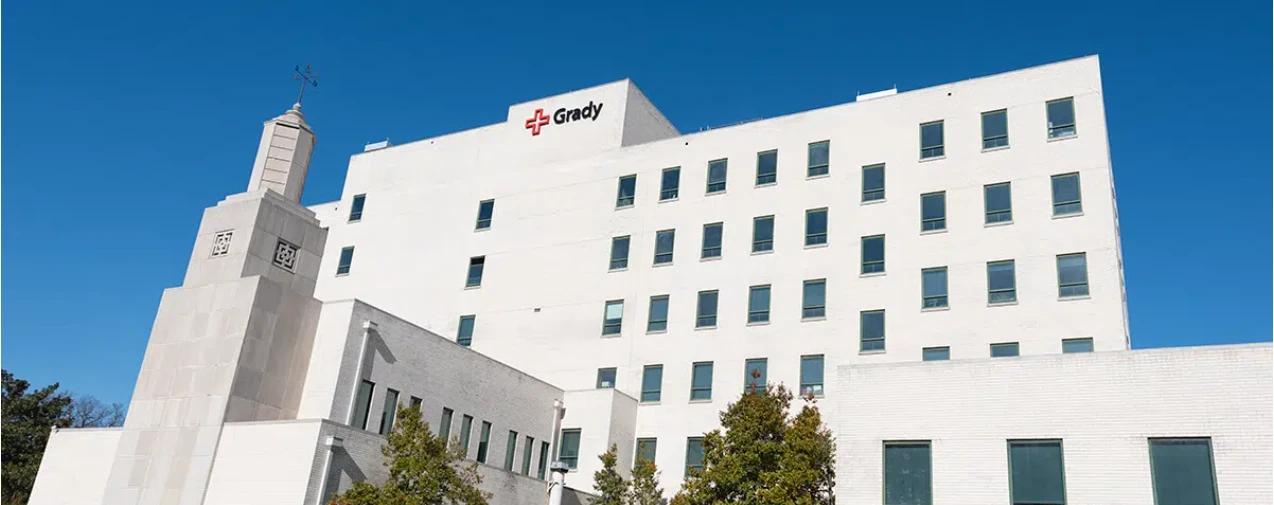
One of the country's largest HIV clinics — serving a predominantly Black patient population.
Grady Health System's Ponce De Leon Center provides care for approximately 6,000 HIV clients of all ages. Of those, 85% are Black, 27% are women, and 83% are at or below 200% of the federal poverty level.
The center integrates primary internal, pediatric, and infectious disease care at a single location and houses partner organizations providing legal services, housing support, and a food program. Grady participated in an AIDS United-funded Enhanced Patient Navigation for Women of Color initiative from 2016–2019, and in 2020 received a HRSA Special Projects of National Significance (SPNS) grant for the B.WOW demonstration project.
Grady Health System (B.WOW) — Atlanta, Georgia
One of the country's largest HIV clinics, serving approximately 6,000 patients — 85% Black, 27% women, 83% at or below 200% of the federal poverty level. Offers primary, pediatric, and infectious disease care, alongside legal services, housing support, and a food program.
Challenge
Black women in Atlanta are disproportionately affected — and falling out of care.
In 2020, approximately 36% of Atlanta's population was Black. Yet 69% of people with HIV in Atlanta were Black. Grady's Ponce De Leon Center was serving approximately 1,319 Black women with HIV.
For Black women aged 18–24 in the center's care, retention in care at 12 months was 82% — dropping to 77% at 36 months. Viral suppression fell from 64% at 12 months to 52% at 36 months. Clients face multiple intersecting barriers: being unaware of partners' HIV risk, prioritizing family above personal health, poverty, transportation and housing instability, and low health literacy.
“
“
Having an HIV diagnosis is tough but at least I can take a medication that will allow me to continue living a healthy life; with a cancer diagnosis you don't know if the treatment is going to work.
BW
B.WOW Participant
Grady Health System · Atlanta, GA
Solution
For the SPNS grant, Grady created the B.WOW (Black Women Organized for Wellness) program — an Enhanced Patient Navigation (EPN) intervention that bundled two evidence-based approaches simultaneously: EPN for Women of Color and PL Cares®.
Enhanced Patient Navigation (EPN)
EPN provided participants with six educational sessions covering HIV and the viral life cycle, communicating with healthcare providers about adherence and side effects, understanding basic lab tests, stigma and disclosure, HIV and substance use, and HIV and mental health. Each participant also received additional support — transportation, appointment scheduling, referrals, and coaching from a Grady patient navigator.
PL Cares® — mobile platform + administrative portal
PL Cares® was deployed as the second arm of the intervention, supporting the development of self-efficacy and connecting participants with both staff and each other. The program specifically targeted Black women who:
Had fallen out of care for more than six months
Had missed two or more medical appointments in the prior six months
Were loosely engaged in care
Were not virally suppressed
Had multiple comorbidities
As with UVA and AID Upstate, participants without phones were provided phones and data plans — removing the most fundamental barrier to digital engagement and giving participants the stability of a consistent phone number.
The Community Board — the team's favorite feature
The Grady team made the PL Cares community board central to their intervention. They used it to engage women through motivational posts, discussion topics, quizzes, and shared educational session materials via the Resource section. Participants shared recipes, positive quotes, and created a space to connect beyond clinical care.
“
B.WOW has given these women a reason to keep going. There is information shared that may save a life, stop a wrong decision, as well as give an honest opinion. These relationships provide a different perspective than what one would see within themselves. These women need this program.
BW
B.WOW Participant
Grady Health System · Atlanta, GA
The PL Cares® application helps incorporate self-efficacy — the second part of the bundled intervention — through consistent, daily engagement that reinforces agency and connection. Participants found a space where their HIV care and everyday life were both prioritized.
Outcomes
6-month preliminary results: strong retention and viral suppression gains.
In the initial 2013 study, CD4 counts, viral load suppression, retention in care, and rates of visit constancy all improved significantly for PL clients. Qualitative analysis also found that PL's community message board provided a meaningful sense of connection and social support — a finding that directly shaped the peer community feature in PL HOPE.
91.6%
6-month result
Retention in care (2 visits ≥90 days apart, or ≥1 visit with HIV PC)
79%
vs. 52% at 36-month baseline
Viral suppression in any post-enrollment period
98%
post-enrollment
ART prescribed to participants
All quoted data is preliminary. 6-month data. The intervention is still collecting 12-month data.
The Dope Chicks — Community Advisory Board
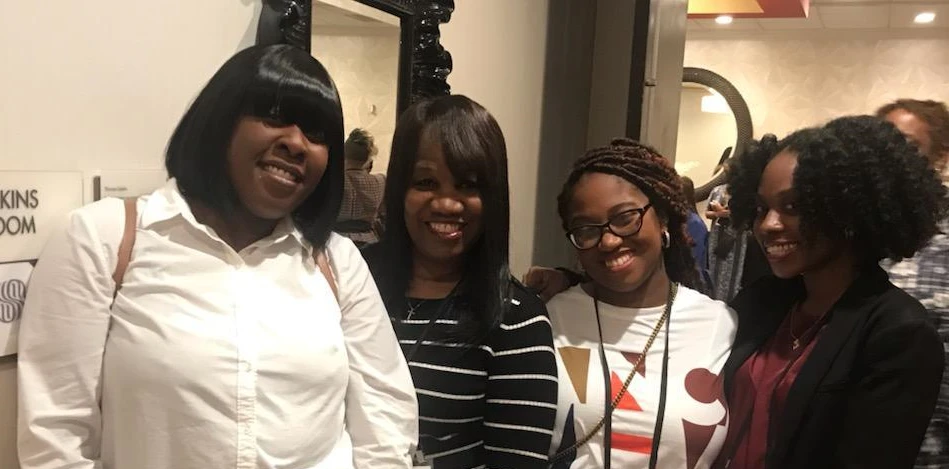
The Grady team incorporated a Community Advisory Board of ten participants who called themselves the Dope Chicks. Recruited from the B.WOW intervention itself, they advised the team on community board topics, workshop ideas, and ways to improve access to care for more Black women — a model of patient co-design embedded into the program.
Impact of PL Cares during COVID-19
The B.WOW project launched during the COVID pandemic. The PL Cares app provided a safe, remote way for women to stay engaged in their care and communicate with the Grady team without in-person contact. It allowed Grady to continue delivering resources and reducing social determinants of health barriers even when the clinic was physically inaccessible.
Funding
HRSA SPNS grant for Improving Care and Treatment Coordination.
The B.WOW program was funded through a 2020 HRSA Special Projects of National Significance (SPNS) grant — specifically the Improving Care and Treatment Coordination: Focusing on Black Women with HIV Demonstration Project. The SPNS program funds innovative models that can be replicated and scaled nationally.
Grady also built on prior funding from an AIDS United-funded Enhanced Patient Navigation for Women of Color initiative (2016–2019), which established the clinical foundation for the B.WOW bundled intervention model.